
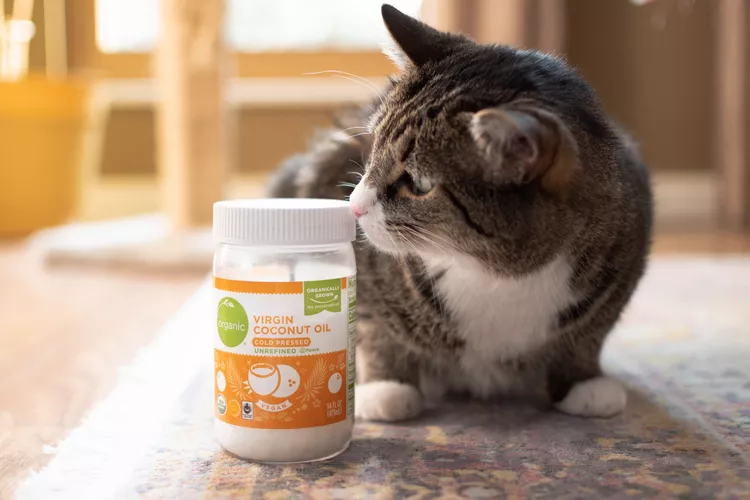
Coconut oil has been used in cooking for decades but within the past several years its popularity as a holistic remedy has skyrocketed. Supporters rave about the numerous health benefits of coconut oil for humans. In fact, it has become so popular that some people are starting to give it to their cats for the same benefits they are seeing in themselves.
Is coconut oil beneficial or harmful for cats? Well-meaning cat owners should learn the facts about coconut oil before administering it to their cats.
What Is Coconut Oil?
Coconut oil comes from mature coconuts and can be used in both food and health products. It contains saturated fatty acids called medium-chain triglycerides (MCTs). MCTs, which also include palm kernel oil, are more readily digested than long-chain triglycerides (such as olive oil, soybean oil, avocado oil, and fish oil). As such, MCTs are considered a better source of quick energy than long-chain triglycerides and are less likely to turn into fat in the body. MCTs can be composed of different fatty acid chains, including caprylic acid and capric acid, both of which have shown anti-fungal properties in lab studies. They also contain lauric acid, which has shown anti-fungal as well as anti-bacterial and anti-viral properties. Coconut oil can contain caprylic, capric, and lauric acid, so it's understandable that people would be excited about its potential health benefits.
Does Coconut Oil Have Real Benefits?
While there are anecdotal claims of coconut oil's health benefits, it is important to understand that these claims are not exactly supported by science. Studies have been largely inconclusive and mainly on human subjects. This is not to say that coconut oil is useless or harmful; it is only to clarify that the effects of coconut oil are not proven in cats.
Coconut oil and other foods containing MCTs theoretically have antibacterial, antifungal, antiviral, and anti-inflammatory properties. Some believe that the MCTs found in coconut oil may also aid in digestion, ease digestive disorders, and prevent hairballs in cats. Another theory is that MCTs may help with brain energy and cognition in older cats.
Some owners feel that the use of coconut oil, either orally or topically, can improve the condition of their cat's coat, and can also alleviate dry or itchy skin. Further theories suggest that it may help with metabolic functions, aid in weight loss, alleviate pain from arthritis as well as improve bone health.
It's important to remember that these are unsubstantiated claims without any scientific proof.
Is Coconut Oil Safe for My Cat?
All of the potential benefits mentioned make coconut oil sound like the latest miracle cure-all. You may even be using it yourself and experiencing some benefits. If you think coconut oil might be a good option for your cat, you should first consult your veterinarian for advice. Although coconut oil is not poisonous to cats, it may not be the ideal addition to every cat's diet. Any change in diet, supplements, or medications can affect your cat's health. Depending on your cat, increased fat in the diet may lead to weight gain or digestive issues. Your veterinarian knows your cat's history and physical condition and can help you make the right decision.
In general, the use of coconut oil is not something typically recommended by veterinarians. That is mainly because the potential benefits listed above are reported by owners, not backed up by science. In order to determine the safety and effectiveness of coconut oil, it must be studied in a controlled setting with a large testing population that is repeatable and peer-reviewed. A study on a small number of cats published in 1985 found that the cats would avoid diets with even low levels of MCTs, meaning that cats likely find them unpalatable. So, while your friendly neighborhood pet supply store employee may swear by a coconut oil remedy that worked on their cat, there is really no way of knowing whether it will have the same effect on your cat or not.
How Can I Use Coconut Oil?
If coconut oil might not be all that it's cracked up to be, how exactly do you go about using it for your cat? First of all, do not use coconut oil on your cat until you speak with your veterinarian, who will be able to tell you which uses are appropriate, and in which amounts.
Topical use may seem safe and fairly easy to administer for skin issues. However, your cat will most likely lick off the oil after it has been applied. This means the cat ingests the oil and potentially irritates the skin in that area. You can use an over-the-counter shampoo with organic coconut oil (although most cats don't usually appreciate getting a full bath), but make sure it is intended for use on cats.
Oral use may be an option if your vet approves. Make sure you follow your vet's advice for quantity and frequency and formula. They will be able to tell you a proper dosage so that you don't accidentally give too much at a time and end up with a greasy, diarrhea mess on your hands. They can also advise you on the risks versus benefits of oral coconut oil if your cat is prone to gaining weight, or has a history of pancreatitis, irritable bowel disorder, or any other disease or metabolic condition.