
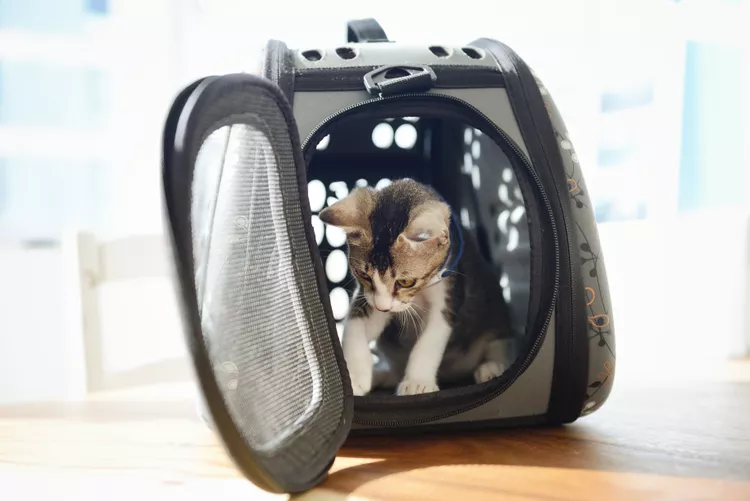
Crate training with cats isn't as common as with dogs, but it is worth the effort. Kittens learn more easily and quickly than adult cats, but even set-in-their-ways felines can accept training to the crate.
Many cat owners say “hates the crate” is a top reason cats don’t visit the veterinarian as often as they should, and many felines only see the crate when it's time to be taken to the veterinarian or groomer. Your pet cat is smart. It only takes once for the feline to learn that the crate means unpleasant experiences.
Instead, train your kitten to associate the crate/carrier with fun, positive experiences. This allows you to quickly confine and safely transport the cat whenever necessary, rather than play hide-and-seek during emergencies to find the frightened feline. Happy acceptance of the crate also means less stress, and a happier, emotionally healthier cat.
Introduce the Crate
Start by making the crate part of the furniture. Set it on the floor in a corner of the room for your cat to explore at its leisure. If it’s out all the time, the strange or scary factor of the crate wears off. Take the door off the crate so your cat can come and go. Toss a soft blanket or towel inside for a bed, especially one that you've rubbed over your cat's body so it recognizes the scent of the area.
Try Clicker Training
Consider using clicker training to inspire your cat to quickly go into the crate. Review how to “load the clicker” and locate the training treats for spur of the moment sessions. Then wait for the opportunity when you see your cat approach, sniff, or enter the crate. Click the clicker to tell the cat that touching, going inside, or even just approaching the crate is what you want, and then reward with the treat or favorite toy. The more you practice, the better your pet cat will become at hanging out near or even inside the crate.
Put the Door Back On
It may take a week or more for the kitten or cat to feel comfortable around the carrier. Once that happens, put the door back on, and wait until the cat goes inside. Then shut the door while praising in a calm, happy voice. The goal is to convince your cat that this is normal and no reason for upset feelings. After a minute or so, let your cat out and give it a treat or toy reserved only for the best performance. Praise the dickens out of the cat. Your cat should know that staying calm inside the crate earns it good things.
Build on Repetition
Repeat training sessions at least once a day over the next two weeks, building up the time until the kitty stays inside three minutes, four, then five minutes and so on. Once your cat has reached 10 minutes and remains calm, pick up the carrier while the cat is in it and carry it around, and then let the cat out. Take the carrier out to the car (with the cat inside), sit there and talk to your cat, then bring it back into the house and release it. Don't forget to offer the treat.
Soon, you should be able to take your cat for car rides in the carrier without your feline throwing a fit. The cat will learn that most of the time the carrier means good things. The vet visit won't be the only association it has.
Problems and Proofing Behavior
Never give up on training and just transport your cat without a crate or carrier. Pets should always ride in a carrier when traveling in a car because this keeps them from distracting you while driving or being injured when you brake suddenly or are in an accident. Plus, a loose pet can escape from the car.
If your older cat has had a lot of bad associations with the crate, don't expect behavior to change overnight. A common training mistake is to rush the steps and expect immediate results. Give your cat plenty of time. You may need to pause on certain steps of the training process and stay there for a week or two. Once your cat has succeeded, then move on to the next step.
Also, be mindful of what your cat associates with the crate or carrier. If you only put it in the carrier to go to the vet, groomer, or someplace else it doesn't enjoy, it's likely your cat will not like the carrier. Try just moving the carrier from room to room without leaving the house, and going for a short drive and then returning home. Then, try getting the cat into the crate and visiting various places the cat might enjoy, such as a friend who will welcome your pet with treats.
If you continue to struggle to get your cat to accept a crate, try swapping it for a different container (for example, swap a hard carrier for a soft one, or try a bigger or smaller crate).