
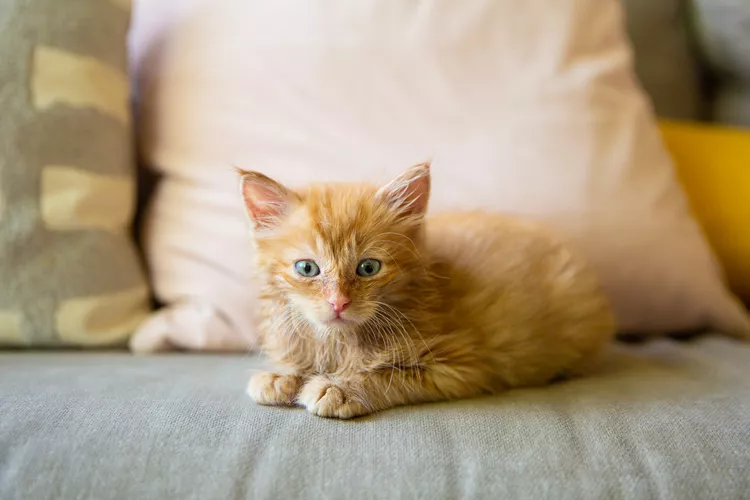
The all-important first six weeks in a cat's life will do much in determining its personality and character for the rest of his life. This period is extremely important for the health of the developing kitten.
Very young kittens are susceptible to several serious threats, such as parasites and upper respiratory infections (URI), which when combined with other problems can lead to fading kitten syndrome (FKS), a serious and often fatal condition. FKS is more often found with litters of stray and feral cats, so if you are in a kitten foster situation, those kittens should be kept away from other cats in the home until they have all been checked clear of communicable disease.
Kittens will probably never grow again at the remarkable rate they accomplish during this period, and seeing the changes in their development from week to week is an incredible experience.
Week 1
In the first week, your newborn kitten is a tiny food processing factory. Here is what to expect:
- The kitten will be concentrating on feeding and growth. It will double its birth weight this week.
- Other physical changes are taking place which will become more apparent soon.
Week 2
Your kitten is continuing his growth at an astonishing rate, by at least 10 grams per day. These changes also occur:
- Its eyes will start to open and will be completely open at 9 to 14 days old. All kittens' eyes are blue and will remain so for several weeks. Vision will be blurred at first. As a kitten's pupils don't dilate and contract readily, protect your kitten from bright lights.
- The kitten's sense of smell is developing, and it will even hiss at unfamiliar odors.
- You may be able to determine the sex of the kittens by this time. Don't be too sure though; even veterinarians sometimes make mistakes this early.
Week 3
The kitten has many changes:
- Ear canals will be completely open.
- Kittens can voluntarily eliminate now, as the digestive system is developing.
- They will start to socialize now with each other and with people and will want to explore their surroundings a bit.
Week 4
Coming up on a month, the kitten shows these characteristics:
- Depth perception has developed.
- The sense of smell is fully developed.
- Baby teeth will start to show.
- Kittens are learning to walk without stumbling.
- They will interact more with their littermates, even to the point of forming "alliances" which may or may not be gender-based.
Week 5
After a month the kitten graduates to new experiences;
- Kittens may be introduced to canned kitten food at this time. Select a quality brand of canned kitten food with a named meat source as the first ingredient (chicken is good). Many breeders and rescuers will have been feeding this food to the mother cat, and the kittens will quickly accommodate to eating what mom eats.
- Kittens can also be trained to the litter box now. They need a smaller, separate box, one that will be easy to access and exit, with only an inch or two of litter.
- As human babies experiment by tasting everything, so will kittens. If your kitten is eating the litter during their training period, try changing the litter type and monitor closely to see if the behavior continues. If your kitten insists on eating any type of litter available, talk to your veterinarian to see if underlying health issues should be investigated.
Week 6
Socializing a kitten at this age will make all the difference in the world to his personality and interaction with humans as adult cats. Here are important milestones in the sixth week:
- Kittens can run, pounce, leap, and entertain themselves and their human observers endlessly. Just as quickly they can fall asleep at the drop of a hat, (growing up is hard work), so let them get all the rest they need.
- Kittens will follow their mother cat's lead in socializing with humans. If she has a comfortable relationship with the humans in her life, so will her kittens. However, if kittens are not accustomed to human handling by six weeks, it will be a long, slow, process to train them later, and, as an adult, such a cat may never be a "lap cat."
- Feral cat rescuers may consider having the litter spend time with humans (separate from the mother) before six weeks of age for optimal results in socializing the kittens for new homes.
Socializing Tip
Kittens should learn at this age that hands are not for playing—hands are for holding, petting, and feeding. One of the best "toys" for teaching this lesson is a plastic drinking straw. You can drag it across the floor and watch the kitten chase it, then wiggle it a bit and allow him to pounce on it and "capture" it. The baby may proudly strut with his prize before settling down to bite on it. The plastic is nice and crunchy and makes a good aid for teething, as well.
Well-socialized and completely weaned kittens may be ready for their new forever homes in just a couple of weeks. If you've been waiting for your kittens to be old enough to adopt, you'll probably be pretty excited by now.
Patience, though. Remember, "All good things come to those who wait."